During IDT 7100 Designing Online Assessements course, I created a curriculum product. This curriculum product, an assessment ePortfolio using Canvas, displays my beliefs, scholarship, and design of online assessments. The most difficult part of aligning my assessments was trying to distinguish between an activity and an assessment for discussion boards. At first, I thought the discussion board was an activity. But then I realized that discussion boards are a place for one to practice what they learned and to show what they know. In fact, I began to view all activities as formative assessments. I now believe wholeheartedly that activities must be aligned with outcomes and support summative assessments.

The Online Assessement course was the first class in my IDT program. This asynchronous course lead me back to to where I left off in my teaching career—standards and assessment alignment. As well, it reinforced theory and application. I was reminded and understood more deeply after the course that alignment of objectives and assessments are essential for learning. The Course Planning Alignment map was helpful in seeing this connection.
I had also highlighted Coggle, a mind mapping assessment tool using Kaltura screen casting and displayed it in my assessment e-portfolio. I created this screen cast to help others see the mind mapping features that Coggle provided.

Artifacts from eportfolio
The link in the Final Assessement Worksheet below takes you to the e-portfolio that I created within Canvas for the Online Assessment course. The worksheet also reveals five salient quotes taken from the discussion posts or assignments during the course. Also within the document, I discuss three critical insights based on my learning experiences during the course.
The following is a document where I reflect upon my findings during the data analysis of assessment scores taken from a course gradebook. Though I was not the instructor of the course, the practice of understanding what the data told me about student performance was eye opening. Below I discuss those discoveries.
The following document shows the instructional course plan that I created for an undgraduate admissions team. The plan identifies the alignment of course objectives with formative and summative assessments along with learning materials and activities.
Artifacts Embedded Within Course Planning and Alignment Map.

For module 1, I created a formative assessment in the form of a KWL (know, want to know, and learned) using Miro to help the learner use prior know to help them connect to the new content and to anticipate what they might learn.
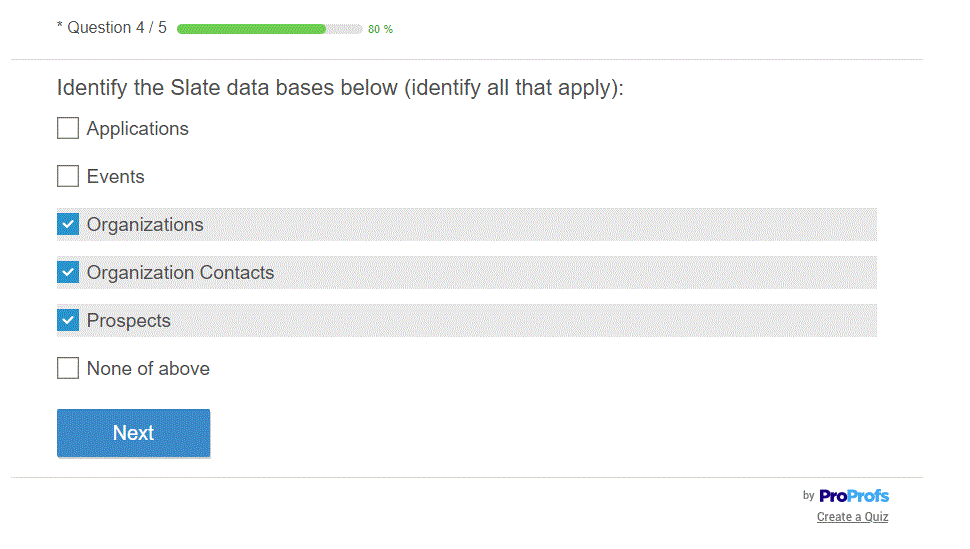
For the learning materials in module 1, I borrowed an Edpuzzle CRM video to use as an introduction to Slate, the team’s CRM. Though the video is a quiz, it serves as learning material and not a high or low stakes assessment.
I also used Padlet for another formative assessment in Module 1.
Formative assessments offer ways to help the learner practice what they have learned. Padlet is an online tool that helps them do this.

 Tracy Yarchi Portfolio